
Next.js 15 & React 19: The Comprehensive Architecture Guide
“Mastering async request APIs, React 19 Actions, Turbopack, and the new caching paradigms in modern web engineering.”

Author & Tech Creator
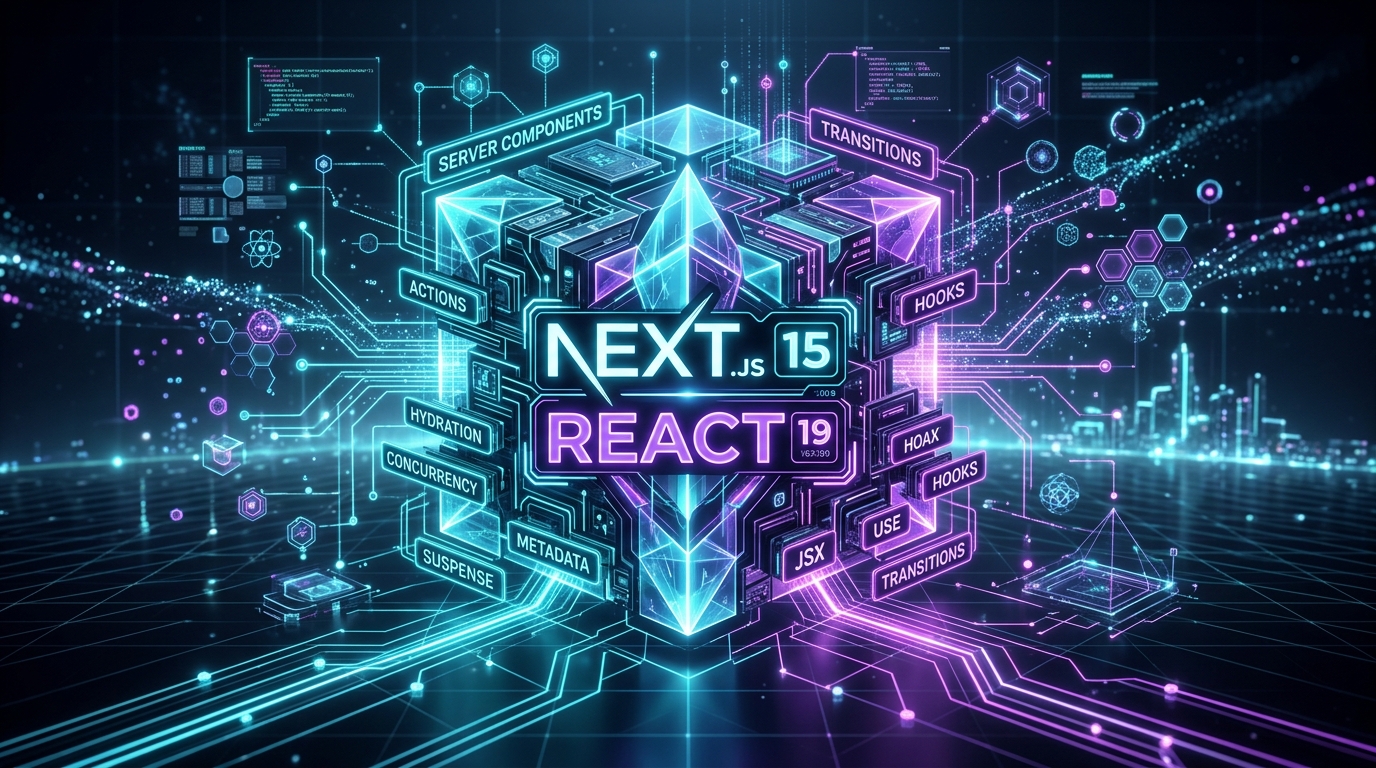
Next.js 15 & React 19: The Comprehensive Architecture Guide
The web ecosystem is undergoing one of its most transformative updates with the concurrent releases of Next.js 15 and React 19. From asynchronous dynamic request handling to React Server Actions, the React Compiler, and Turbopack entering production readiness, this guide dives deep into the architectural shift and how developers can build high-performance, resilient applications.
What's New in Next.js 15?
Next.js 15 establishes a new baseline for speed, developer ergonomics, and server-first web development. The framework shifts towards sensible uncached defaults, giving developers fine-grained predictability over network requests.
Key Highlights of Next.js 15
- Async Request APIs (Breaking Change): Headers, cookies, params, and searchParams are now asynchronous promises to optimize server rendering throughput.
- Turbopack Dev Stabilization: Turbopack is now the default bundler for local development, providing up to 96% faster code updates.
- Uncached fetch by Default:
fetchrequests andGETRoute Handlers are no longer cached by default, reducing confusing stale data bugs. - Enhanced React 19 Compatibility: First-class support for Actions,
useActionState, and the React Compiler.
// Next.js 15 Async Page Component
export default async function Page({ params, searchParams }) {
const { slug } = await params;
const { query } = await searchParams;
return (
<div>
<h1>Post: {slug}</h1>
<p>Search query: {query}</p>
</div>
);
}React 19: The New Primitives
React 19 introduces native hooks and primitives that drastically simplify asynchronous UI states, form submissions, and optimistic updates.
1. The useActionState Hook
Handling form pending states, optimistic responses, and error handling traditionally required verbose useState boilerplate. useActionState streamlines this directly:
import { useActionState } from 'react';
async function updateProfile(previousState, formData) {
const username = formData.get('username');
try {
await api.saveUser({ username });
return { success: true, message: 'Profile updated!' };
} catch (error) {
return { success: false, message: error.message };
}
}
export function ProfileForm() {
const [state, formAction, isPending] = useActionState(updateProfile, null);
return (
<form action={formAction} className="space-y-4">
<input name="username" placeholder="Enter username" className="input" />
<button type="submit" disabled={isPending}>
{isPending ? 'Saving...' : 'Save Profile'}
</button>
{state?.message && <p>{state.message}</p>}
</form>
);
}2. Optimistic UI with useOptimistic
Instantaneous user feedback is critical for high-retention applications. useOptimistic allows you to immediately reflect state changes before server confirmation.
import { useOptimistic } from 'react';
export function CommentList({ comments, onAddComment }) {
const [optimisticComments, addOptimisticComment] = useOptimistic(
comments,
(current, newComment) => [...current, { text: newComment, sending: true }]
);
async function handleSubmit(formData) {
const text = formData.get('comment');
addOptimisticComment(text);
await onAddComment(text);
}
return (
<div>
{optimisticComments.map((c, i) => (
<div key={i} className={c.sending ? 'opacity-50' : ''}>
{c.text}
</div>
))}
<form action={handleSubmit}>
<input name="comment" required />
<button type="submit">Post Comment</button>
</form>
</div>
);
}Architectural Best Practices for Production
When building scalable applications with Next.js 15 and React 19, keep the following principles in mind:
Separation of Concerns between Server and Client Components
- Keep Leaves as Client Components: Push client interactivity (
onClick,useState, browser APIs) to the leaf nodes of your component tree. - Server Component Data Fetching: Perform direct database queries and secure API calls inside Server Components without creating redundant intermediate REST endpoints.
Leveraging the Power of Turbopack
Turbopack minimizes warm-up times and provides near-instantaneous Fast Refresh even on projects with thousands of modules. Enable it locally with:
next dev --turboConclusion
Next.js 15 combined with React 19 brings the most coherent full-stack JavaScript architecture to date. By adopting async request patterns, native action hooks, and Turbopack, developers can craft buttery-smooth user interfaces with minimal client-side overhead.
Happy coding with the new standard of web development!
Written by Mayur
AuthorPassionate software developer and data analysis specialist. Sharing deep dives on full-stack architecture, machine learning models, and modern web engineering.